
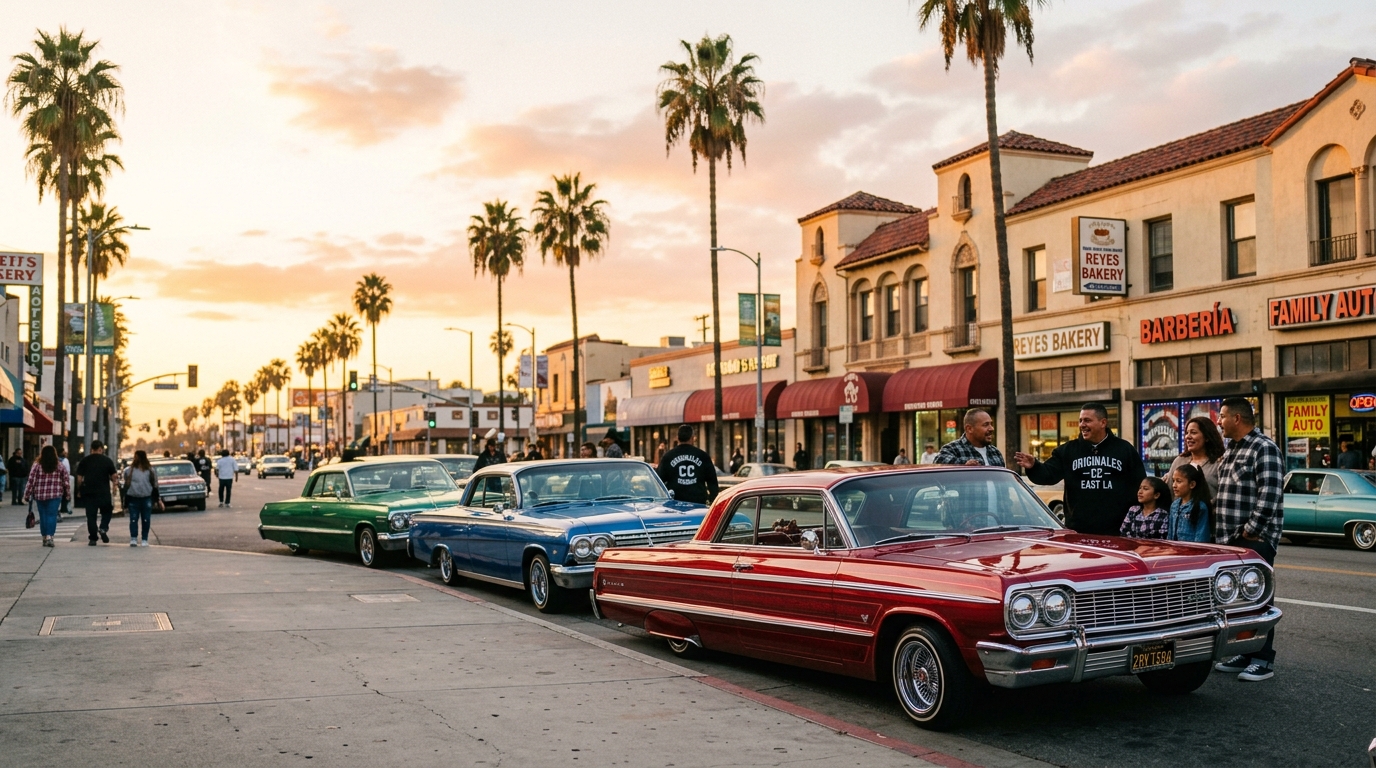
Los Angeles lowrider culture is one of the city’s most recognizable automotive traditions. Yet the cars are only one part of the story.
Lowriding brings together craftsmanship, family, neighborhood identity, music, art, cruising, and car clubs. A finished lowrider can take years of work. It may also carry stories that stretch across generations.
That culture remains highly visible in 2026. Los Angeles recently hosted the Lowrider Magazine Tour Finale at the Los Angeles Convention Center. Smaller cruises and neighborhood events have also continued across Southern California.
At the same time, California’s cruising rules have changed. State law now prevents cities and counties from banning cruising through local anti-cruising ordinances. The change has helped bring renewed attention to a tradition that was restricted in many communities for decades.
For carmeets.la, lowriding deserves to be covered as more than a visual trend. It is a living part of Los Angeles car culture.
Why Lowrider Culture Means More Than a Custom Car
A lowrider is built to be noticed, but speed is not the main goal. The traditional idea is simple: low and slow.
That approach changes how people experience the car. Instead of rushing past, the vehicle becomes something to study. Paint, chrome, upholstery, engraving, stance, wheels, and bodywork all become part of the presentation.
The result can feel closer to moving art than a typical performance build.
Lowriding Grew From Community, Identity and Craftsmanship
Lowriding developed strongly within Mexican American and Chicano communities in Southern California and the American Southwest. Los Angeles became one of its most important centers.
The Smithsonian describes lowriding as a culture built around craftsmanship, community, and Chicano pride. Its current lowrider exhibition also highlights Los Angeles cruising and historic cars from the region.
That history matters because lowriders have often been misunderstood. Popular media sometimes reduced the culture to stereotypes. The real scene is much broader.
Car clubs have organized shows, charity events, neighborhood gatherings, and family activities for decades. Builders have also passed technical skills from one generation to another.
Paint, Chrome and Hydraulics Tell a Story
The visual details of a lowrider are rarely accidental. Builders often use layered paint, pinstriping, murals, metal flake, engraving, custom upholstery, and polished chrome.
Hydraulics are another defining feature. They allow the suspension height to change and can create the movement associated with show competitions.
However, not every lowrider is built for dramatic hopping. Many owners focus on stance, smooth cruising, restoration, and presentation.
Small details can be just as important as large modifications. A carefully restored dashboard or period-correct steering wheel can say as much about a build as a custom paint job.
That is one reason lowriders photograph so well. Every part of the vehicle can contain another layer of craftsmanship.
Car Clubs Help Keep the Culture Connected
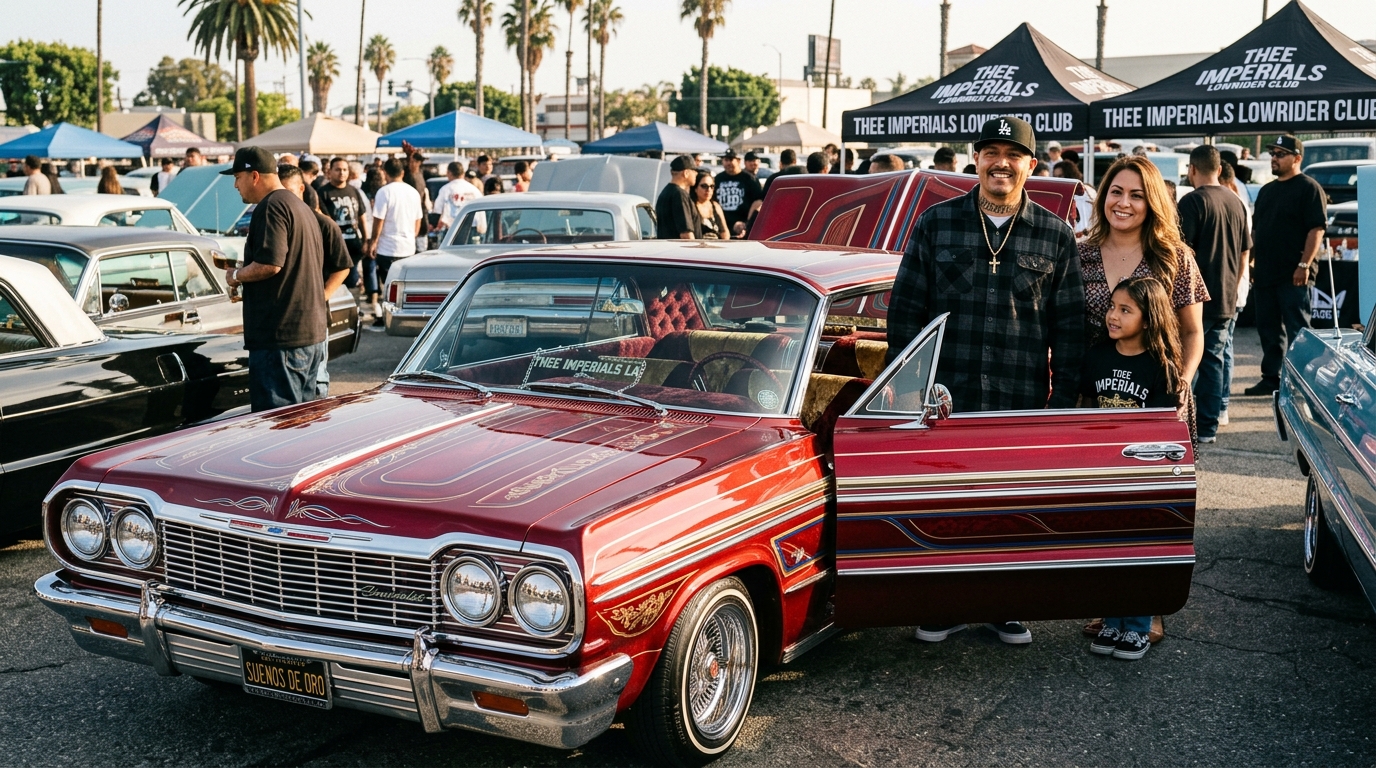
Car clubs are central to lowrider culture. They create structure, identity, and long-term relationships between owners.
A club can also become a second family. Members may help each other find parts, finish builds, transport vehicles, or prepare for shows.
That support matters because many lowriders are long-term projects. A vehicle may change slowly over many years.
Some cars also stay within one family. Parents pass them to children, and younger owners continue the work.
This is why lowrider events often feel different from a simple parking-lot meet. The cars may be the attraction, but the relationships around them give the gathering its character.
Cruising Is Part of the Culture, Not Just the Destination
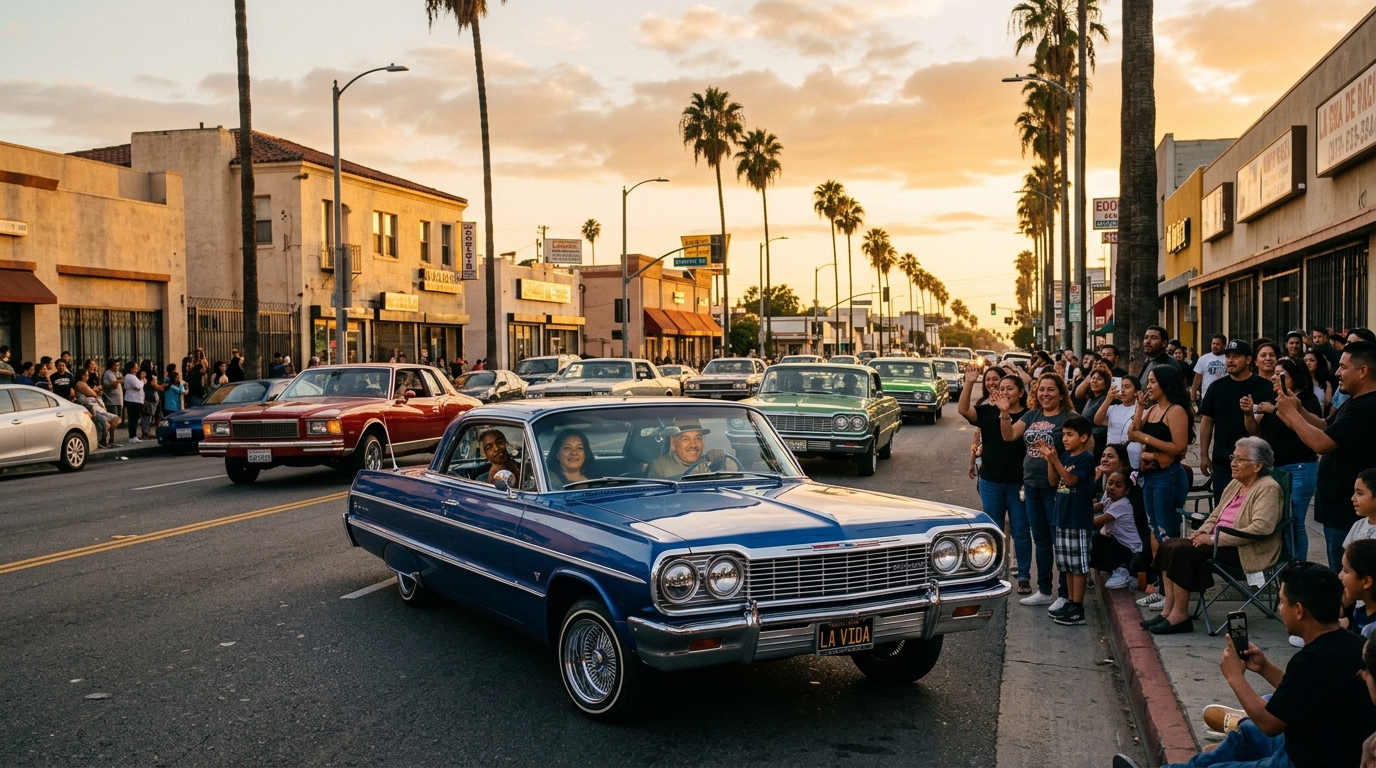
Lowrider culture is closely tied to cruising. The drive itself is part of the experience.
Historic boulevards across Los Angeles County became places where owners could show their cars and see friends. Whittier Boulevard is especially important to that history.
Other corridors have developed their own scenes. In 2026, organized and community-focused cruises continued in places such as Highland Park and Whittier.
These events show why lowriding works best when cars and neighborhoods are connected. People can watch from sidewalks, local businesses can participate, and the boulevard becomes part of the event.
California Changed the Rules Around Cruising
For years, anti-cruising laws affected lowrider communities across California. Some local rules restricted repeated driving along the same street.
That changed when California adopted Assembly Bill 436. The law took effect in 2024.
According to the California Highway Patrol, the law removed local authority to regulate cruising through those ordinances. It also removed a height restriction that had affected lowered vehicles.
The change did not make reckless driving legal. Traffic laws still apply. Drivers must still follow speed limits, equipment rules, parking regulations, and other safety requirements.
Still, the change carried cultural importance. Cruising could again be recognized as a legitimate automotive activity rather than automatically treated as a problem.
That distinction is similar to the one discussed in our guide to legal car meets and illegal street takeovers in Los Angeles. Responsible cruising and dangerous takeover activity are not the same thing.
Why the Modern Los Angeles Lowrider Scene Is Still Growing
Lowrider culture has survived because it continues to evolve without losing its roots.
Older builders keep traditional styles alive. Younger enthusiasts bring new photography, fashion, fabrication, and media skills into the scene.
Major events also show that the audience remains strong. The 2026 Lowrider Magazine Los Angeles Tour Finale took place on September 5 at the Los Angeles Convention Center.
The show brought together lowriders, custom bicycles, builders, clubs, vendors, and music. It also closed the magazine’s national 2026 tour.
That kind of event gives highly detailed show cars a large stage. Smaller neighborhood cruises provide a different experience. Both are important.
Lowriders Connect Generations of LA Car Enthusiasts
One reason the scene remains relevant is that it can be enjoyed at several levels.
You can build a show car, restore a family vehicle, join a club, photograph events, or simply attend a cruise. There is no single way to appreciate the culture.
Lowriding also overlaps with music and visual art. West Coast hip-hop helped make lowrider imagery familiar around the world.
However, the culture existed long before those music videos. Its roots in Chicano communities, customization, and boulevard cruising are much deeper.
Learning that history can change how a visitor sees the cars. A hydraulic setup is no longer just a dramatic modification. A mural is no longer only decoration.
Each choice can reflect family, faith, neighborhood, memory, or personal identity.
How to Experience Lowrider Culture With Respect
If you are new to lowrider culture, start by attending an organized show or cruise. Watch how people interact before treating the event like a photo set.
Ask before touching a vehicle. Do not lean on cars for photos. Give owners space when they are parking or preparing a display.
If you photograph people, be respectful. A car may have deep personal meaning to the owner or family.
It also helps to learn the history. The Smithsonian’s Corazón y vida: Lowriding Culture exhibition is a strong starting point. It explains lowriding through cars, community, art, and Chicano history.
Then experience the culture locally. Follow the carmeets.la events calendar for upcoming Los Angeles automotive gatherings.
You can also browse the carmeets.la gallery to see how different builds are photographed. If you want a wider view of the current scene, read our guide to Los Angeles car meets in fall 2026.
Most importantly, do not reduce lowriders to hydraulics and flashy paint. Those features are part of the craft, but they are not the whole culture.
The modern Los Angeles lowrider scene is about preservation and creativity at the same time. Builders protect traditions while still finding new ways to make a car personal.
It is also about visibility. Cruising places the vehicle in public space where the community can see it, discuss it, and remember it.
That helps explain why lowrider culture has remained powerful for generations.
Los Angeles has many automotive scenes, from JDM meets to European cars and modern performance builds. Lowriding stands apart because its relationship with local history runs especially deep.
Cars change. Neighborhoods change. Styles move in and out of fashion.
Lowrider culture continues because the people behind it keep the tradition moving.
For Los Angeles, that makes the lowrider more than a custom car. It is part of the city’s automotive identity.