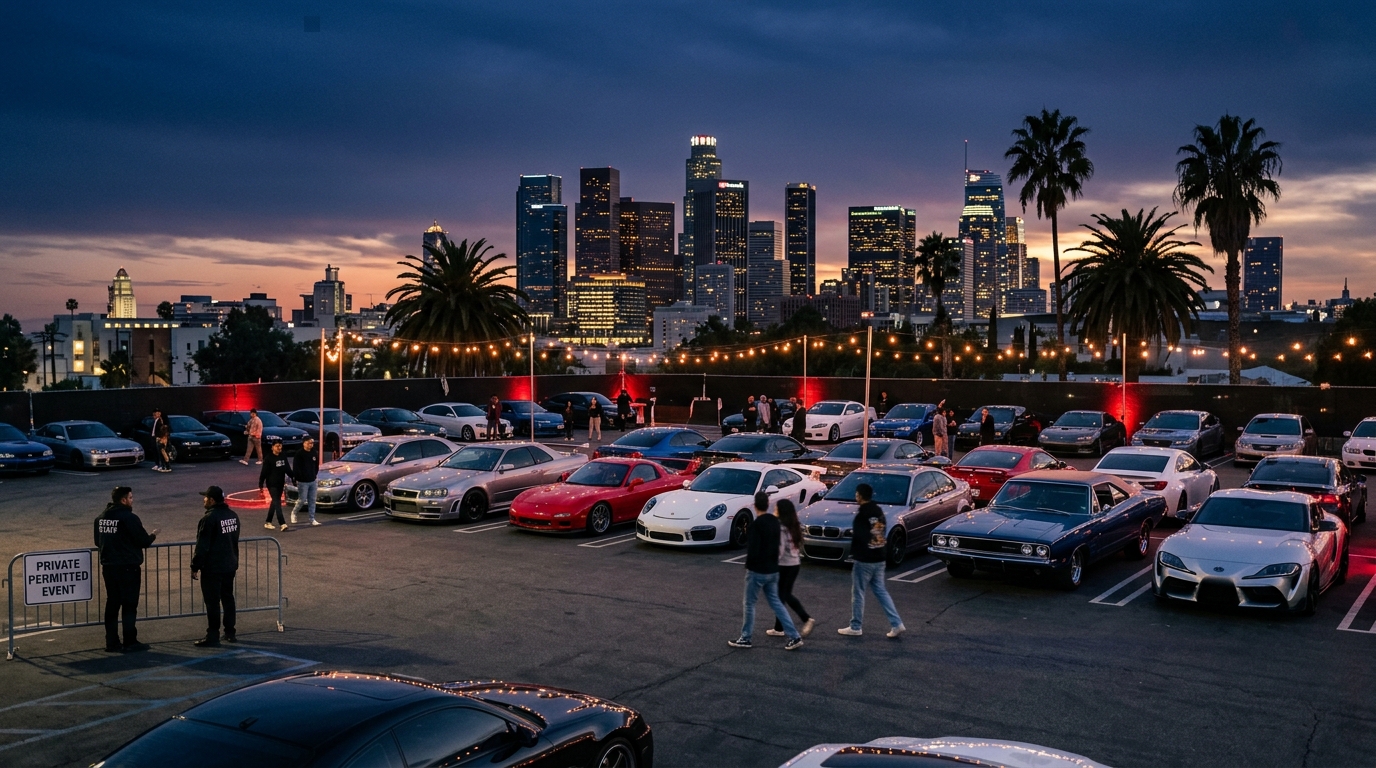
Los Angeles has one of the most active car communities in the country. On almost any weekend, enthusiasts can find Cars & Coffee gatherings, museum cruise-ins, JDM meets, classic car nights, lowrider events, and organized shows.
That same region also continues to deal with illegal street takeovers. The two may involve modified cars and large crowds, but they are not the same type of event.
A legitimate car meet is built around permission, parking, community, and respect for the venue. A street takeover usually blocks public roads or intersections so drivers can perform dangerous stunts.
The difference matters more in 2026. Los Angeles County has increased enforcement while also exploring safer legal options for automotive enthusiasts.
For drivers, spectators, photographers, and organizers, knowing that difference helps protect the scene. It also helps keep good venues available for future events.
Legal Car Meets and Street Takeovers Are Not the Same Thing
Car culture does not become illegal simply because many enthusiasts gather in one place. The key issue is how the event is organized and what happens once people arrive.
Legal gatherings can take many forms. Some happen in private parking lots with owner permission. Others take place at museums, racetracks, event spaces, or approved public locations.
A good event gives people room to enjoy cars without turning nearby streets into a stunt area.
What a Legitimate Los Angeles Car Meet Looks Like
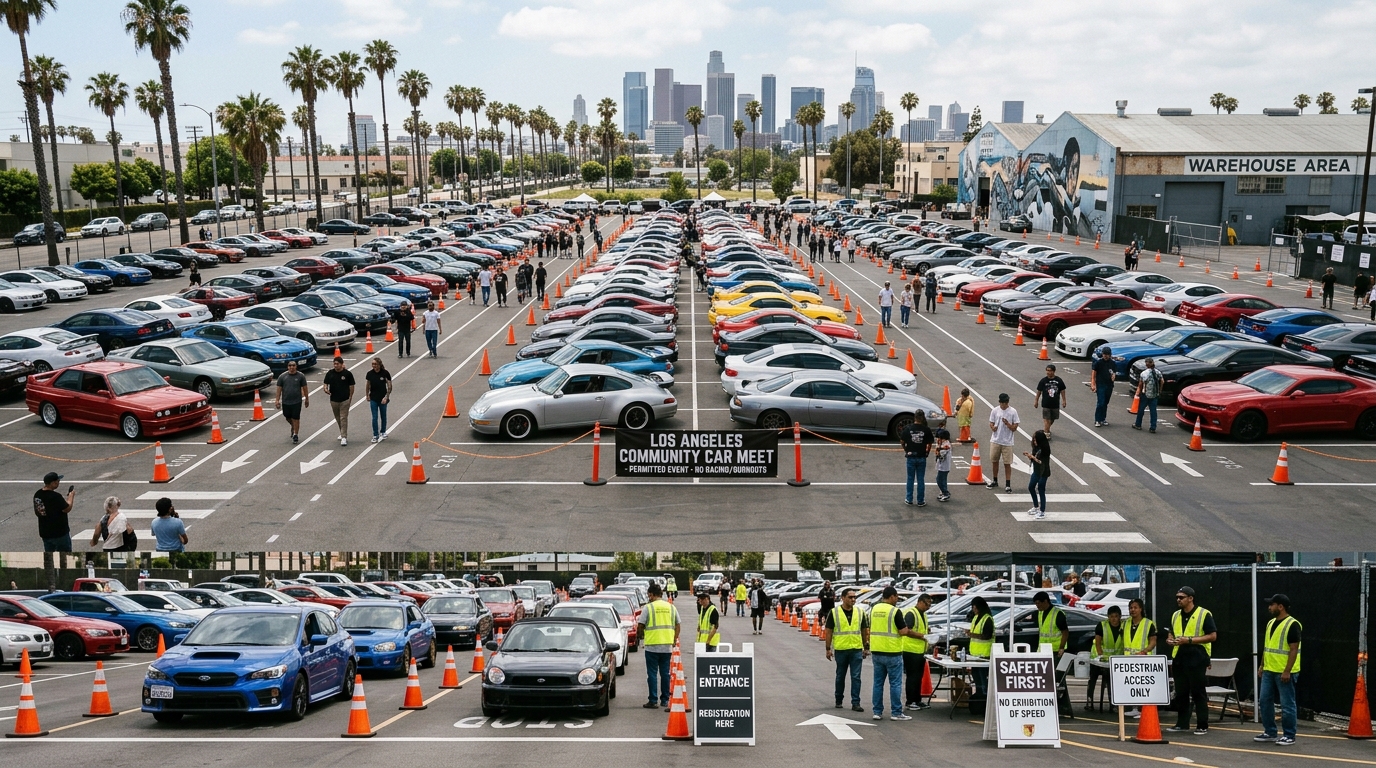
A well-run car meet usually has a clear location, time, and set of rules. The organizer should also have permission to use the property.
Visitors should know where to park. Drivers should know how to enter and leave. If registration is required, that information should be easy to find.
Many successful Los Angeles meets are simple. Owners park their cars, walk the rows, talk about builds, take photos, and leave responsibly.
That format works because the cars remain the focus. There is no need to block intersections or create danger to attract attention.
Permission, Rules, and Venue Respect Matter
Property permission is one of the clearest differences between a meet and an unauthorized gathering. A parking lot may look empty, but that does not mean anyone can host an event there.
Organizers should work with the property owner and follow local requirements. Larger events may also need permits, security, traffic planning, insurance, or other approvals.
Attendees have responsibilities too. Follow parking directions. Keep fire lanes and driveways open. Do not leave trash behind.
Noise also matters. Excessive revving can create complaints even when the event itself is allowed.
A strong relationship with a venue can support years of events. One chaotic night can end that relationship immediately.
How a Street Takeover Crosses the Line
A street takeover is very different. These events often involve illegally blocking an intersection or road so drivers can perform donuts, drifting, or other reckless maneuvers.
Spectators may stand only a few feet from moving cars. Residents can lose access to their homes. Emergency vehicles may also have difficulty passing through.
Property damage can happen quickly. So can crashes, injuries, fires, and fights.
Social media can make the situation worse. A location can spread rapidly, causing hundreds of people to arrive before nearby residents understand what is happening.
That is not the same as a legal car meet. It is also not the kind of activity that helps Los Angeles car culture grow.
Enforcement and Penalties Are Increasing in 2026
Los Angeles County has made street takeover reduction a major public safety effort. Its strategy combines enforcement, education, infrastructure, prevention, and legal alternatives.
The County says its work includes the Sheriff’s Department, California Highway Patrol, Public Works, youth programs, community groups, and other partners.
This approach matters because takeovers are not only a traffic issue. They can affect neighborhoods, businesses, pedestrians, and families.
For enthusiasts, the message is clear. A social media post calling something a “car meet” does not make the activity legal.
LA County Has Stepped Up Its 2026 Crackdown
In July 2026, Los Angeles County announced stronger enforcement against illegal street takeovers. The County said drivers, organizers, and promoters could face fines of up to $1,000.
Officials also highlighted recent incidents involving injuries, property damage, blocked neighborhoods, and other serious consequences.
At the same time, the County reported progress. It said street takeovers in unincorporated areas and contract cities declined between 2024 and 2026.
That does not mean the problem has disappeared. Instead, it shows why enforcement and prevention continue to receive attention.
The County is also working with social media companies to reduce content that promotes illegal takeover activity.
For car enthusiasts, that creates another reason to be careful when sharing events. Promoting a legal show is different from helping organize dangerous activity on public roads.
If an event has no clear organizer, no approved location, and no rules, think before attending.
How Enthusiasts Can Protect Los Angeles Car Culture
The best answer to illegal takeovers is not to push every modified car out of public view. Los Angeles has a long and important automotive history.
Lowriders, Japanese imports, hot rods, exotics, European cars, classics, and modern performance vehicles all contribute to that culture.
The goal should be to create more places where people can enjoy those cars safely.
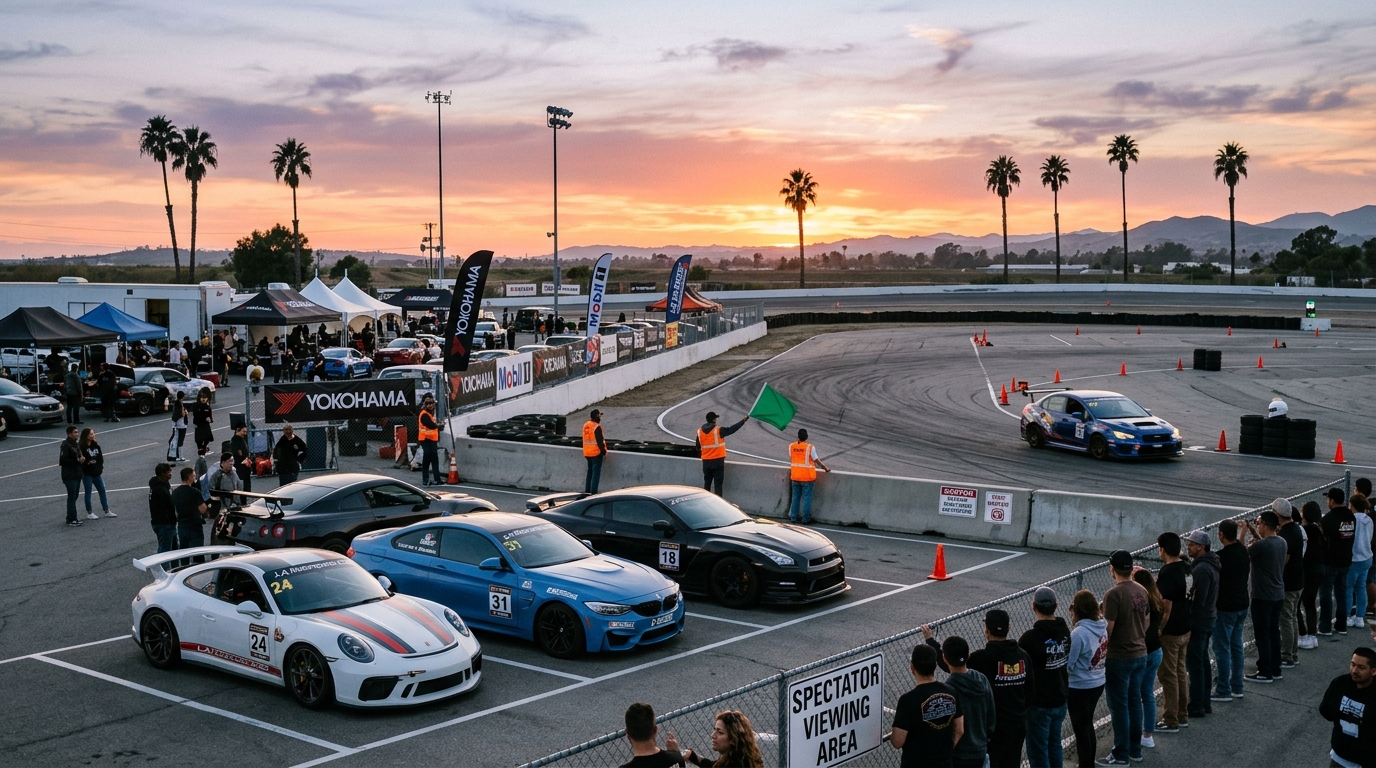
That includes car shows, cruise-ins, Cars & Coffee events, drag strips, autocross, track days, exhibitions, and other sanctioned activities.
Legal Alternatives Matter for the Future of the Scene
Los Angeles County has recognized that enforcement alone is not enough. Its Street Takeover Reduction Action Plan also explores legal alternatives for automotive enthusiasts.
County officials have discussed partnerships and possible sanctioned spaces where drivers can participate without taking over public intersections.
In 2026, the County specifically highlighted work with automotive programs focused on safe and legal alternatives.
That is important for younger enthusiasts. Telling people only what they cannot do does not build a strong car community.
Legal events give drivers something better to join. They also give photographers, fans, and families a safer place to watch.
A legal venue can provide barriers, traffic control, trained staff, emergency planning, and clear boundaries. Public streets cannot offer the same controlled environment.
Enthusiasts can support this shift by attending responsible events. Follow the carmeets.la events calendar for organized gatherings across the region.
If you enjoy Japanese cars, our JDM car culture in Los Angeles guide also covers the growing community around legal meets and heritage events.
Meet Etiquette That Keeps Good Venues Open
Every attendee can help protect a venue. Start by following the organizer’s rules before you even arrive.
Do not speed into the parking lot. Do not perform a burnout when leaving. Avoid unnecessary revving around homes and businesses.
Park only in approved spaces. If the lot is full, find legal parking instead of blocking streets or driveways.
Respect other people’s cars. Ask before touching a vehicle, opening a door, or leaning against it for a photo.
Photographers should also keep moving lanes clear. A good photo is not worth forcing traffic to stop.
Take your trash with you. Support the businesses that welcome the community. Thank organizers when they create a well-run event.
Most importantly, do not encourage reckless behavior for social media content. A short video can bring attention, but it can also cost the community a venue.
The strongest car meets do not need dangerous exits to be memorable.
Los Angeles enthusiasts already have better options. Our guide to the best Los Angeles car meets for fall 2026 highlights organized events and different parts of the local scene.
You can also explore carmeets.la venues and the carmeets.la gallery for more local automotive coverage.
For official information about current enforcement, prevention, and legal alternatives, visit the Los Angeles County street takeover reduction resource.
Legal car meets and illegal street takeovers should not be treated as the same thing. One can build community. The other can put that community at risk.
Los Angeles County’s 2026 strategy reflects that difference. Officials are increasing enforcement while also exploring safer ways for enthusiasts to gather and participate.
That balance is important. Car culture is part of Los Angeles, and responsible enthusiasts should have places to enjoy it.
Keeping those places open depends on what happens before, during, and after every meet.
Respect the venue. Respect the neighborhood.
That is how Los Angeles car culture gets stronger without losing what makes it exciting.