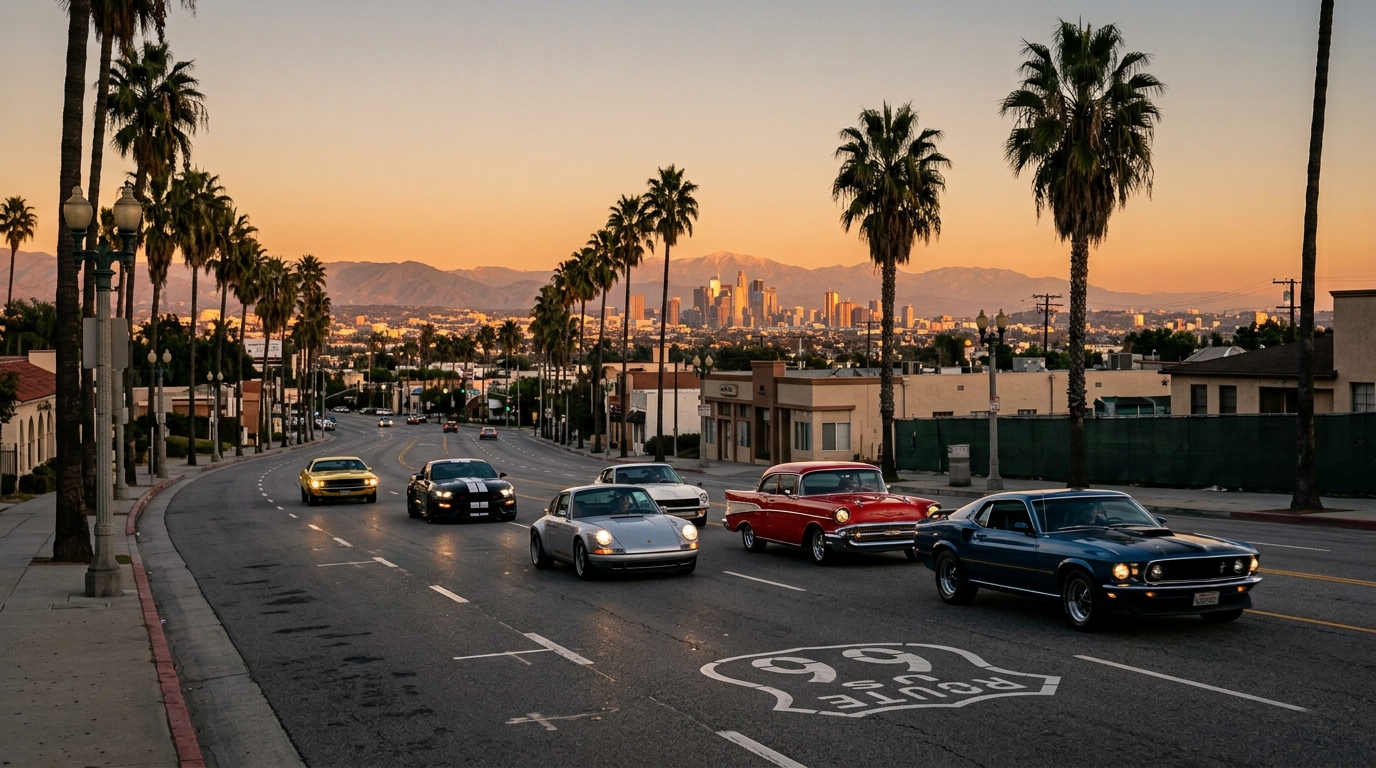
The Route 66 Centennial is more than a history lesson for Los Angeles drivers. It is a reminder of how deeply cars shaped the city.
Route 66 was officially designated in 1926. The road linked Chicago with Southern California and became one of America’s best-known driving routes. In 2026, the Mother Road turns 100.
That anniversary feels especially relevant in Los Angeles. Cars here are not only transportation. They are part of local identity, design, music, photography, cruising, and community.
The centennial also arrives while younger enthusiasts are rediscovering vintage cars, period styling, analog driving, and road-trip culture. For LA car fans, Route 66 connects those interests to a much larger story.
If you follow carmeets.la events, you will see how often modern meets still celebrate older automotive traditions. The Route 66 story helps explain where many of those traditions began.
How Route 66 Helped Shape Los Angeles Car Culture
Route 66 became famous because it connected communities across eight states. However, its California ending gave the road much of its lasting mythology.
For millions of travelers, Los Angeles represented arrival. The city promised work, sunshine, beaches, entertainment, and a new beginning.
Los Angeles Was the Destination at the End of a National Road
Route 66 did not always end at the same place. From 1926 to 1936, its western terminus was in Downtown Los Angeles. The route was later extended west toward Santa Monica.
That history matters because the highway did not simply pass near LA. It entered the heart of the region.
From Downtown Los Angeles to Santa Monica
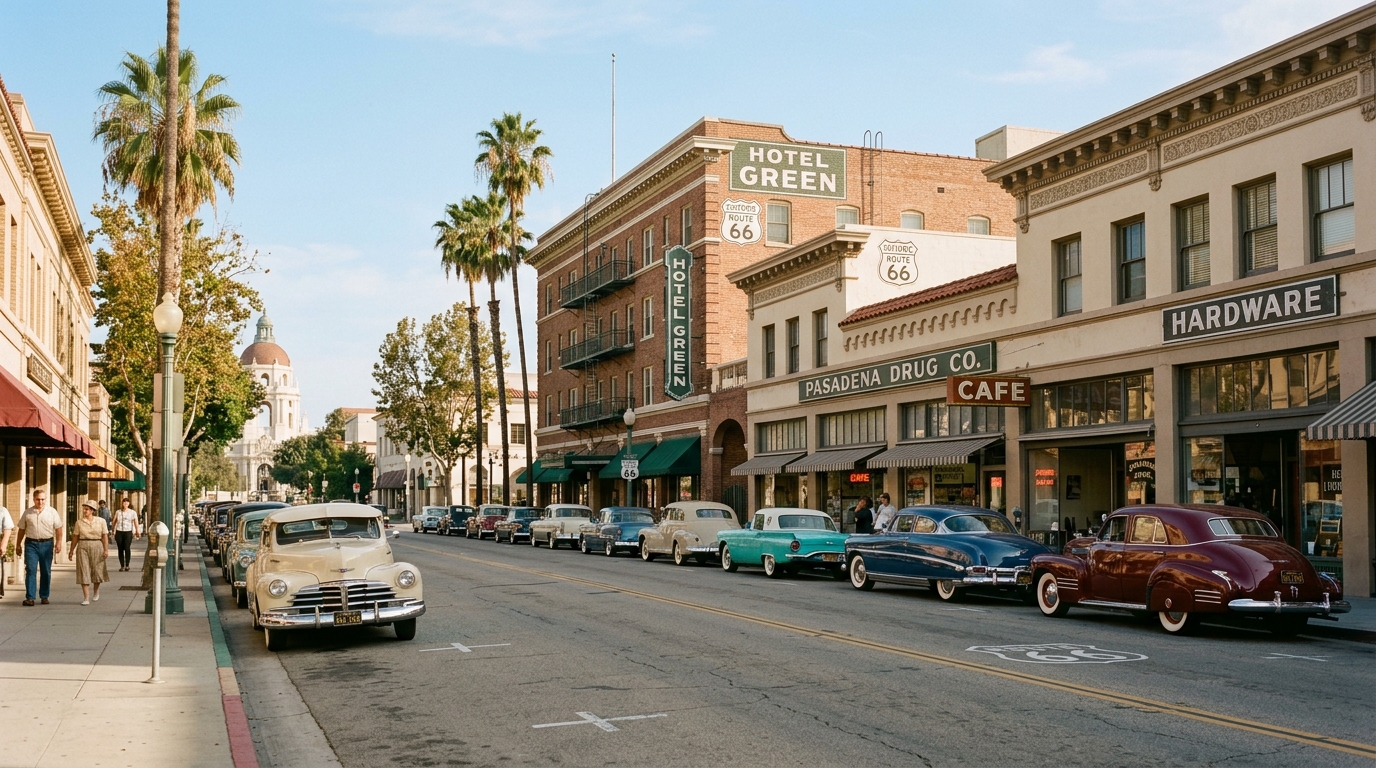
Historic Route 66 alignments crossed places that are still central to Los Angeles life. They included corridors through Pasadena, Downtown LA, Hollywood, West Los Angeles, and Santa Monica.
Today, those old alignments can be difficult to follow as one continuous road. Freeways and later street changes replaced much of the original experience.
Still, fragments remain. Colorado Boulevard, parts of Figueroa Street, Sunset Boulevard, Santa Monica Boulevard, and other historic alignments connect modern drivers with the older road.
The National Park Service notes that Route 66 survives around Los Angeles as several fragments rather than one simple line. That makes exploring it feel more like finding pieces of automotive history.
For car enthusiasts, this creates a different kind of road trip. You do not need to drive from Chicago to participate. A local afternoon route can reveal historic streets, architecture, old roadside businesses, and familiar LA landmarks.
The Road Helped Turn Driving Into an Experience
Route 66 grew during the same period when car ownership changed American life. Drivers needed fuel, food, lodging, repairs, and places to stop.
Businesses responded by designing around motorists. Gas stations became landmarks. Motels used bright signs. Diners faced the road. Roadside architecture became part of the journey.
That idea still appears in Los Angeles car culture today. A good drive is rarely only about reaching a destination.
Enthusiasts care about the road, the view, the stop, the parking area, and the people they meet along the way. That mindset is visible at Cars & Coffee events, canyon drives, cruise-ins, and organized road trips.
Our guide to the best Los Angeles car meets for fall 2026 shows how social driving remains part of the local scene. The setting matters almost as much as the cars.
Why the Centennial Feels Relevant to Today’s LA Enthusiasts
The Route 66 Centennial arrives at a useful moment. Modern car culture moves quickly, yet many enthusiasts are looking backward for inspiration.
Older wheels, period paint colors, boxy body shapes, manual transmissions, film photography, and retro graphics are popular again. Even new builds often borrow details from earlier decades.
Route 66 gives that nostalgia real context. It shows how cars changed where people lived, traveled, worked, and spent money.
Classic Cars and Modern Builds Share the Same Story
You do not need to own a 1950s cruiser to appreciate Route 66. The road’s influence reaches far beyond classic American cars.
JDM owners understand the value of preserving a specific era. Porsche enthusiasts celebrate driving roads and mechanical character. Lowrider culture turns cars into moving expressions of community and craft.
Modern performance owners also understand the appeal of a memorable drive. Different communities may use different cars, but the emotional connection is similar.
That is why Route 66 works so well as a meeting point. It gives several generations of enthusiasts a shared automotive reference.
The centennial can also encourage people to learn more about older vehicles. Instead of seeing a classic only as a display piece, younger fans can understand the roads and culture that shaped it.
Preservation Matters as Much as Nostalgia
Celebrating Route 66 should not mean turning the past into a costume. The stronger lesson is preservation.
Historic roads, buildings, signs, motels, bridges, and commercial districts can disappear quickly. Once they are gone, the physical connection to automotive history becomes harder to understand.
The National Park Service documents Route 66 sites across California. Preservation groups also work to protect surviving places and tell the stories behind them.
That effort has a direct parallel in car culture. Owners preserve vehicles, restore original parts, document modifications, and save models that once seemed ordinary.
Both forms of preservation require patience. They also require people to care before something becomes rare.
When you visit an old Route 66 location, treat it with the same respect you would give a well-preserved car. Follow property rules, support legitimate local businesses, and avoid damaging historic sites.
How Los Angeles Drivers Can Celebrate Route 66 at 100
The centennial is already being marked across California throughout 2026. Some major events happened earlier in the year, while fall celebrations continue toward the official birthday.
Route 66 turns 100 on November 11, 2026. That gives LA enthusiasts several ways to participate before the anniversary year ends.
Drive, Learn, Photograph, and Support the Mother Road
You can start close to home. Explore a historic alignment through Los Angeles County instead of planning a full cross-country trip.
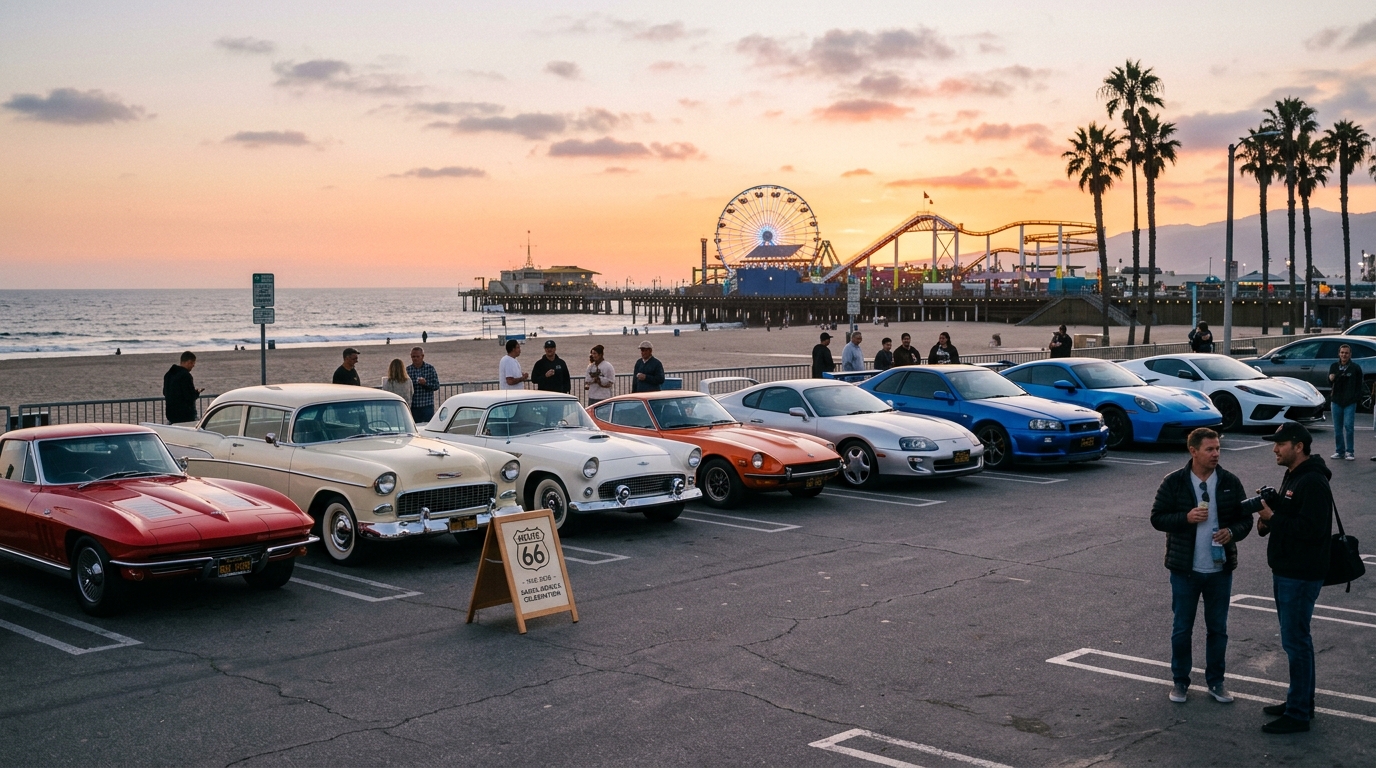
Choose a small section and research it before you drive. Pasadena, Downtown Los Angeles, and Santa Monica all offer useful starting points.
For location ideas, the carmeets.la venues guide can help you understand different parts of the region. You can also use the carmeets.la gallery for inspiration before photographing your drive.
Keep the trip simple. Pick a few historic points, allow extra time, and avoid rushing between stops.
Photography is another good way to participate. Look for old architecture, road shields, vintage signs, classic cars, and details that show how the route changed over time.
However, avoid blocking traffic or entering private property for a photo. The goal is to document the road without creating problems for the communities along it.
Fall 2026 also includes California centennial programming. Route 66 events continue in Barstow, Pasadena, Los Angeles, and other communities. Film screenings and local celebrations continue into the final months of the year.
For official history and preservation information, visit the National Park Service Route 66 California guide. It explains the road’s California history and surviving resources.
You can also support the centennial by spending time at museums and historic districts. Buy from local businesses when possible. These places keep Route 66 from becoming only a memory.
Most of all, use the anniversary as a reason to drive with purpose. The best Route 66 experience is not about speed.
It is about noticing where the road goes, what survived, and who still keeps the culture alive.
That idea fits Los Angeles car culture perfectly. A great car meet is also more than a row of vehicles. It is the people, stories, roads, neighborhoods, and traditions around them.
Route 66 has carried those stories for a century. In 2026, LA enthusiasts have a rare chance to connect today’s scene with the road that helped shape it.
Follow the carmeets.la event calendar for more local automotive gatherings. You can also browse the carmeets.la blog for more stories about LA cars, communities, and driving culture.