
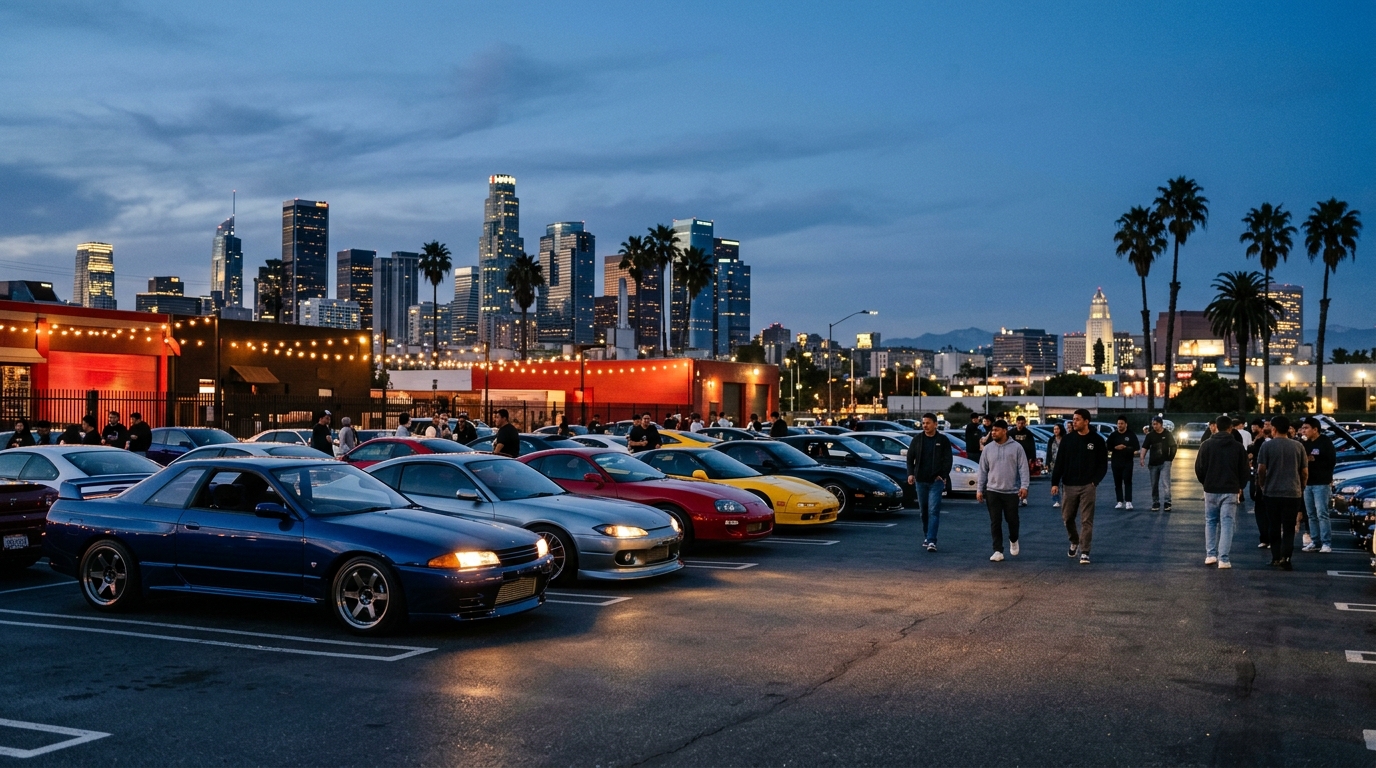
JDM car culture in Los Angeles has moved far beyond a niche interest. In 2026, Japanese classics, period-correct builds, and modern tuner cars remain major parts of the local scene.
That interest is easy to see across Southern California. Weekend meets bring together restored Hondas, vintage Toyotas, Nissan performance cars, Mazdas, kei cars, and newer builds.
Many owners now focus as much on history and preservation as performance. Original trim, rare factory parts, and period-correct modifications can attract serious attention.
Fall 2026 is especially active. The Japanese Classic Car Show returns to Long Beach in October. Petersen Automotive Museum is also supporting several JDM-focused programs.
For carmeets.la, that makes Japanese car culture one of the strongest scenes to follow this season. It connects cars, design, photography, fashion, nostalgia, and community.
Why JDM Car Culture Is So Strong in Los Angeles
Southern California has the right ingredients for Japanese car culture. The weather supports year-round gatherings. The region also has deep ties to imports, tuning, motorsports, and Japanese-American communities.
Los Angeles is also a place where automotive scenes overlap. A Japanese classic may sit beside a Porsche, lowrider, muscle car, or modern electric vehicle.
That crossover keeps the scene visible. It also gives younger enthusiasts more chances to discover older Japanese cars in person.
Southern California Became a Natural Home for Japanese Cars
Japanese cars became popular for several reasons. Many were affordable, reliable, efficient, and easy to modify.
Over time, certain models also became performance icons. However, the culture eventually grew beyond horsepower.
Owners started building cars around specific eras, styles, and regional influences. The details became just as important as the specifications.
Strictly speaking, JDM means Japanese Domestic Market. It refers to vehicles and specifications intended for sale in Japan.
However, enthusiasts often use the term more broadly when talking about Japanese car culture. A U.S.-market Honda or Toyota is not automatically a true JDM vehicle.
Still, those cars can be an important part of the same Southern California community. That broader culture is what many LA meets celebrate today.
From Import Tuning to Automotive Preservation
Older tuner culture focused heavily on modification. Turbo upgrades, wheels, suspension, engine swaps, and body kits became part of the scene.
That side of Japanese car culture still exists. Yet preservation has become much more important.
Today, enthusiasts search for original interiors, factory trim, rare wheels, period accessories, and correct paint colors. A clean survivor can receive as much attention as a modified car.
This shift matters because many Japanese cars were once treated as ordinary used vehicles. Few people expected some models to become collector cars.
Now, enthusiasts are saving examples that might otherwise disappear. They are also documenting details that younger owners can study.
This mindset connects with other parts of automotive culture. Route 66 fans preserve roads and roadside history. Japanese-car enthusiasts preserve vehicles, parts, and design.
You can see that connection in our Route 66 Centennial and Los Angeles car culture guide.
Japanese Classics Are Now at the Center of the Scene
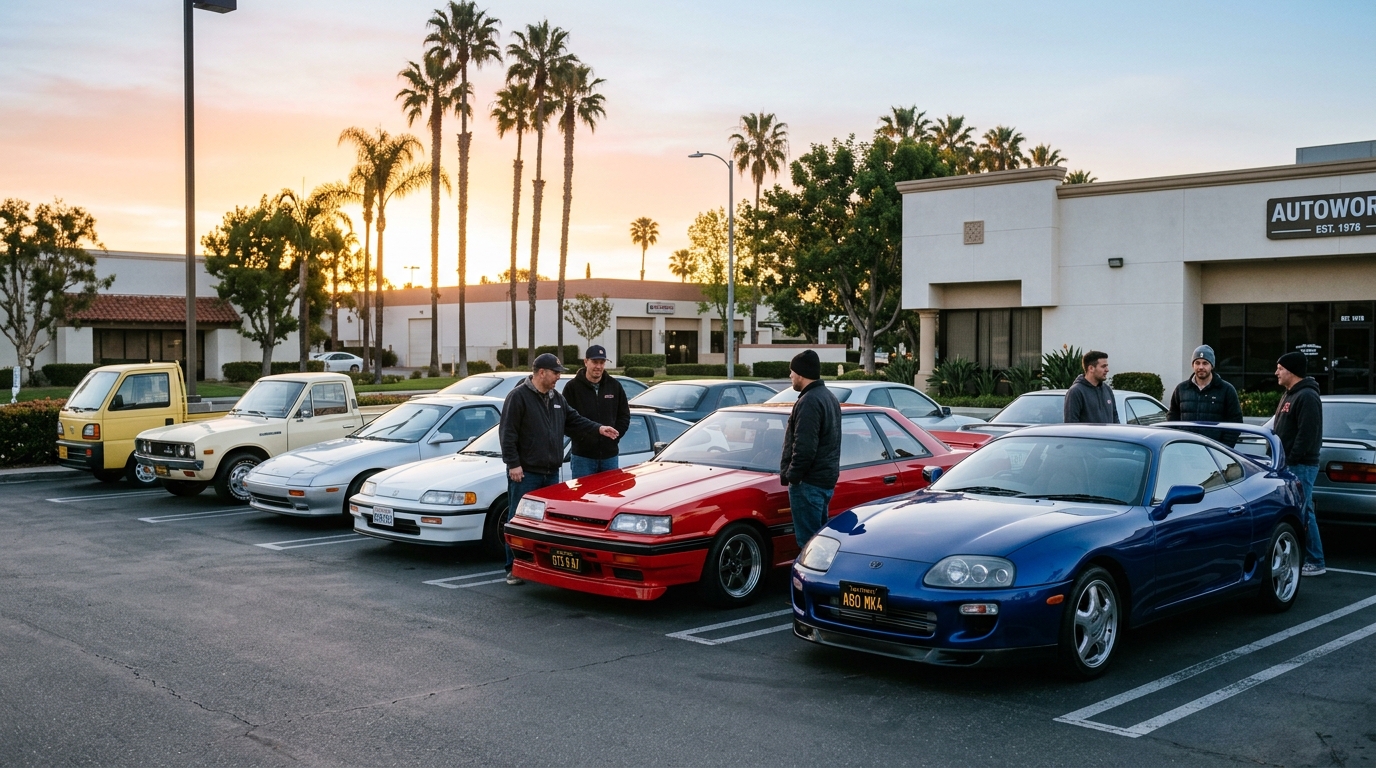
Japanese classics no longer sit on the edge of collector culture. They now receive serious attention at shows, museums, auctions, and enthusiast gatherings.
Southern California plays a major role in that growth. One of the clearest examples is the Japanese Classic Car Show.
JCCS Turns Nostalgia Into Living Car Culture
The 21st Annual Japanese Classic Car Show is scheduled for October 3, 2026. It will take place at Marina Green Park in Long Beach.
The event runs from 9 AM to 3 PM. It brings Japanese classics, motorcycles, vendors, owners, and fans together in one place.
JCCS began when Southern California enthusiasts wanted to celebrate vintage Japanese vehicles. At the time, those cars had not yet reached today’s level of collector interest.
The event grew alongside the popularity of Japanese classics. It is now one of the region’s most recognizable gatherings for older Japanese vehicles.
That makes JCCS useful for more than seeing rare cars. Visitors can compare different approaches to restoration and modification.
Some owners bring factory-spec vehicles. Others focus on period-correct upgrades. You may also find cars with decades of family ownership behind them.
That variety is part of the appeal. Japanese automotive culture is not one fixed design style.
When you walk through a show, pay attention to smaller details. Look at wheels, seats, steering wheels, badges, engine bays, and accessories.
Those details can reveal the period a build represents. They also show how much research went into the finished car.
Before attending, always check the official Japanese Classic Car Show visitor information. Event details and parking information can change.
JDM Culture Is Growing Beyond the Cars Themselves
Modern Japanese car culture includes much more than vehicles. Fashion, photography, streetwear, gaming, die-cast collecting, anime, and Japanese pop culture often reach the same audience.
That crossover is especially visible in Los Angeles. The city already has strong creative communities, so cars naturally mix with design and media.
Street Style, Photography, and Fashion Are Part of the Scene
For 2026, JCCS announced the return of JDM Revival after a decade. Petersen Automotive Museum is hosting the activation at the show.
The concept connects Japanese automotive culture with personal style. Participants can use clothing and accessories inspired by different Japanese eras or subcultures.
Petersen also lists a free JDM X Street Style program for October 10. That event shows how the automotive scene continues to expand beyond mechanical modification.
Photography has become equally important. Social media allows unusual builds and small details to reach large audiences.
However, good automotive photography still depends on respect. Do not move anything around another person’s vehicle without permission.
Avoid blocking walkways while taking photos. Also, give owners enough room to enter or leave their cars.
If you want visual ideas, browse the carmeets.la gallery. Look for clean backgrounds, low angles, interior details, and natural California light.
Where the Los Angeles JDM Scene Is Going in 2026
The current interest in Japanese cars is not simply a repeat of early-2000s tuner culture. Today’s scene has much more historical awareness.
Owners care about rare trims, export-market differences, original equipment, factory options, and regional build styles.
At the same time, younger builders are mixing those references with modern technology. Better suspension, engine management, fabrication, and detailing can improve an older platform.
The challenge is keeping the original character of the vehicle. The best builds often balance both ideas.
This also explains why less-famous Japanese cars are gaining attention. Enthusiasts are looking beyond the usual hero models.
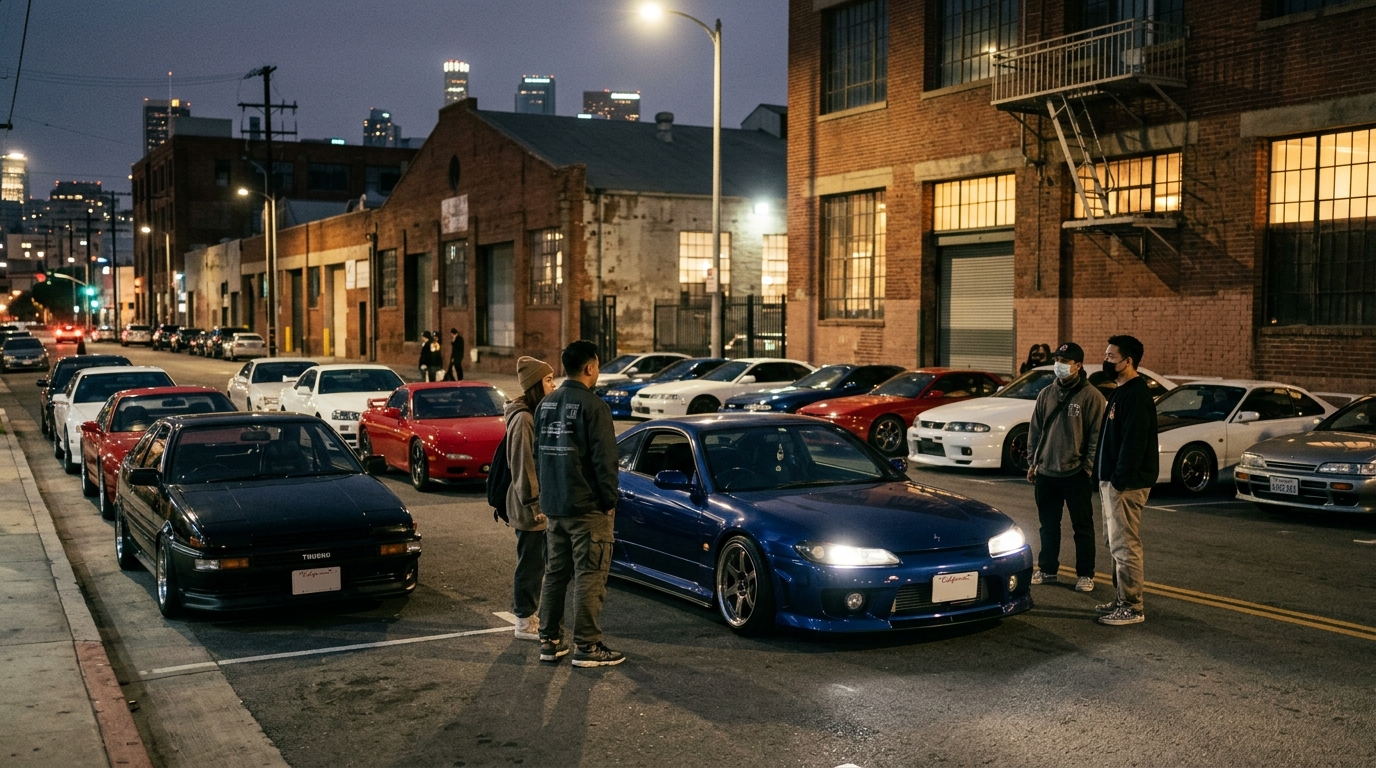
A preserved sedan, wagon, compact coupe, or pickup can now attract a crowd. Sometimes the history behind the car matters more than outright performance.
How to Enjoy JDM Meets Responsibly
Growth also brings responsibility. Larger crowds can put pressure on venues and nearby neighborhoods.
A successful meet depends on the people attending it. Respect the organizer’s rules, the property, and the surrounding community.
Avoid burnouts, reckless exits, and unnecessary revving. One bad decision can cause a venue to stop hosting future events.
If the parking area is full, do not block driveways or nearby streets. Find legal parking and walk to the event.
Also, remember that another person’s car is not public property. Ask before opening doors, leaning on a vehicle, or touching interior parts.
For upcoming gatherings, check the carmeets.la Los Angeles car meet calendar. You can also read our best Los Angeles car meets for fall 2026.
The strongest JDM events feel welcoming because enthusiasts share knowledge. Owners explain rare parts. New fans ask questions. Photographers document details.
Longtime enthusiasts also get a chance to reconnect. That community is one reason Japanese car culture continues to grow in Southern California.
The cars matter, but the people give the scene its identity.
In 2026, JDM car culture in Los Angeles is not only about nostalgia. It is also about preserving automotive history while creating something new.
That combination makes the Japanese-car scene one of the most interesting parts of Los Angeles automotive culture today.
For more local coverage, visit the carmeets.la blog for car meets, featured builds, automotive history, and community stories.