
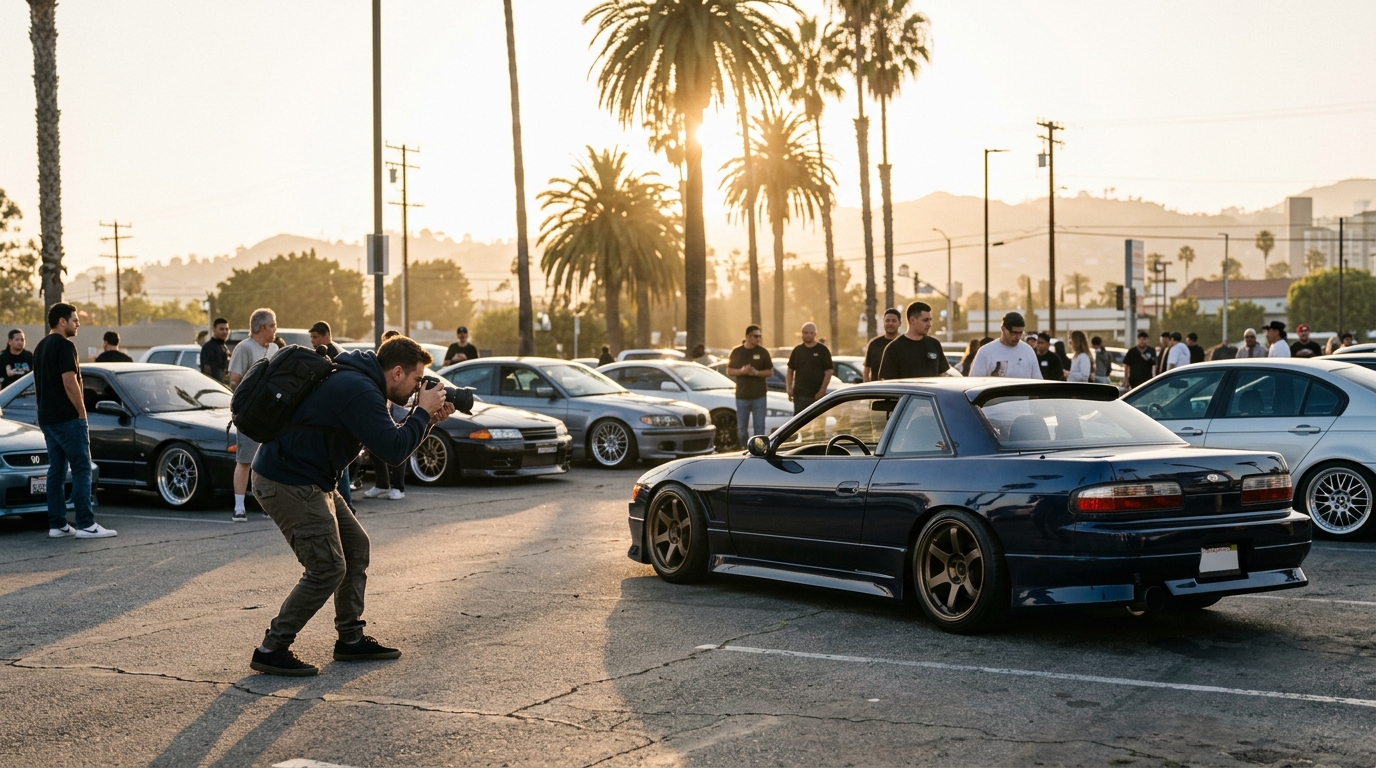
LA car meet photography in 2026 is about more than pointing a camera at an expensive vehicle. Los Angeles has a diverse automotive community, from Japanese performance cars and lowriders to classic muscle cars, European builds, and modern electric vehicles.
Every gathering offers opportunities to capture unique details, meet builders, and document the local car scene. However, crowded parking lots, changing lighting, and moving vehicles can make photography challenging.
You do not need professional equipment to take memorable photos. A smartphone, basic camera knowledge, and respectful behavior can make a noticeable difference.
This guide covers useful camera settings, composition techniques, night photography, and practical etiquette. It also explains how to capture better images while protecting the people and venues that make Los Angeles car culture possible.
How to Take Better Photos at Los Angeles Car Meets
A strong automotive photograph begins with planning. Before taking pictures, observe the lighting, surroundings, and position of each vehicle.
Busy backgrounds can distract from an otherwise beautiful build. Meanwhile, harsh sunlight may produce unwanted reflections on glossy paint.
Start with simple techniques that improve composition before experimenting with advanced camera settings.
Choose the right camera settings and shooting angles
Modern smartphones can produce excellent automotive photographs. Dedicated cameras provide additional control, but equipment alone does not guarantee better results.
Try photographing a car from a low three-quarter angle. This perspective often shows the front, side, wheels, and overall shape in one frame.
Next, capture a straight-on front view and a clean side profile. These angles help viewers understand the vehicle’s design.
Keep the horizon level unless a deliberate artistic composition serves the image.
Best smartphone and camera settings for car meets
For daylight photography, use the camera’s standard photo mode and focus on the vehicle. Keep exposure controlled so bright paint and chrome retain their details.
When using a dedicated camera, start with a moderate aperture such as f/5.6 or f/8 for a clear overall vehicle photograph.
Use a shutter speed fast enough to avoid motion blur. Increase ISO only when available light requires it.
On a smartphone, tap the vehicle to set focus and adjust exposure when the background appears unusually bright.
Avoid excessive digital zoom. Instead, change your position when you can do so safely and without disturbing other attendees.
How to frame JDM cars, lowriders, and custom builds
Different vehicles deserve different visual approaches. A lowered Japanese coupe may look especially striking from a low front angle.
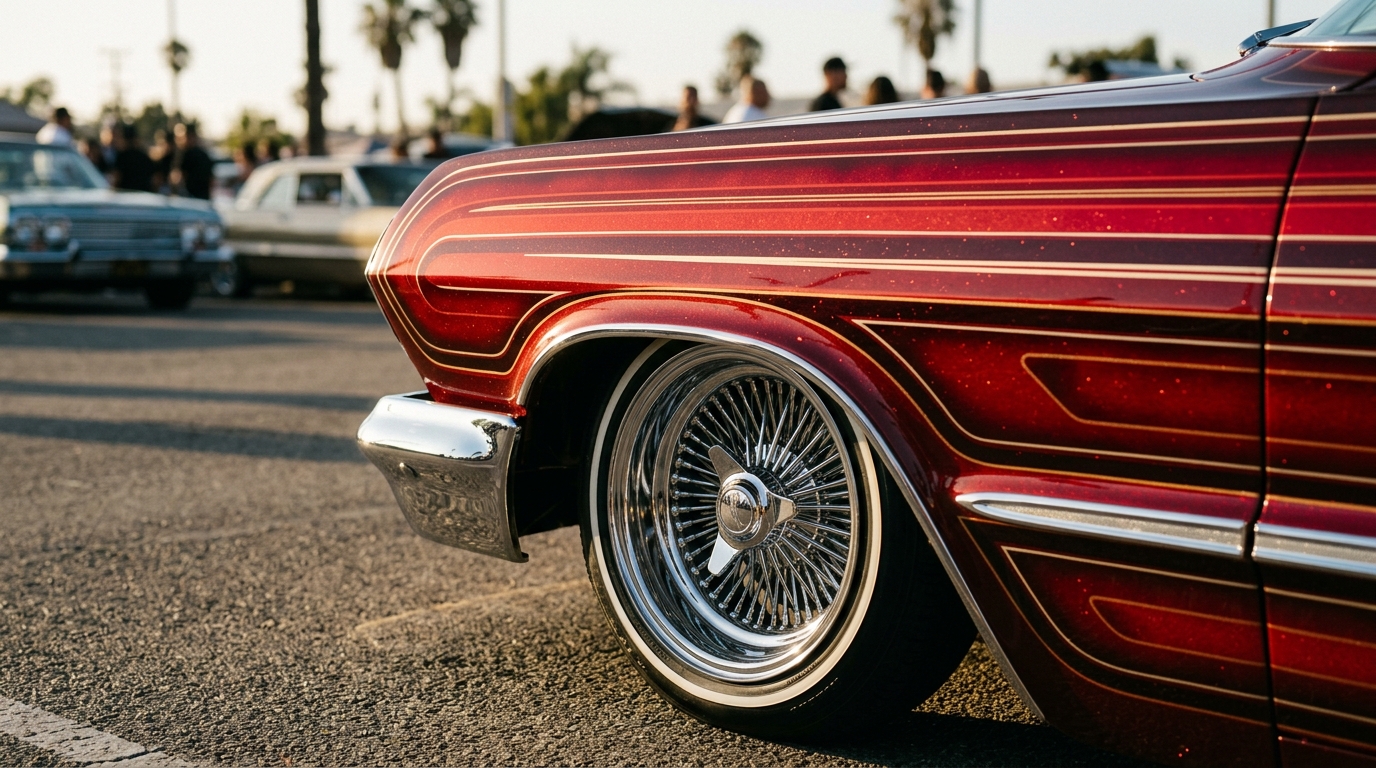
For lowriders, photograph the paintwork, upholstery, chrome details, and suspension presentation. These features often reflect substantial craftsmanship.
Classic vehicles may benefit from compositions that emphasize their body lines, badges, and original design elements.
Before photographing a highly customized interior or an open engine bay, ask the owner whether photography is welcome.
Our Los Angeles lowrider culture guide explores the craftsmanship and community behind these distinctive builds.
Use natural light and backgrounds to improve your images
Lighting changes the appearance of automotive paint. Direct midday sunlight can produce sharp reflections, while softer morning and evening light often reveals body contours more smoothly.
Arrive early when possible. You may find better parking arrangements, fewer people around vehicles, and more opportunities to photograph clean compositions.
Before shooting, check whether a light pole, trash bin, or another car appears directly behind your subject.
A small change in position can dramatically improve the final photograph.
Why golden-hour photography works well in LA
Golden hour usually occurs shortly after sunrise or before sunset. The lower sun angle produces warmer light and longer shadows.
This lighting can complement metallic paint, polished wheels, and reflective body panels.
However, direct sunlight may still create glare. Move around the car to find an angle that balances highlights and shadows.
For portraits featuring a vehicle owner, ask permission and position them where the light falls naturally on their face.
Try capturing both wide environmental images and tighter detail shots. Together, they tell a fuller story about the vehicle and its surroundings.
Night Photography and Etiquette at LA Car Meets
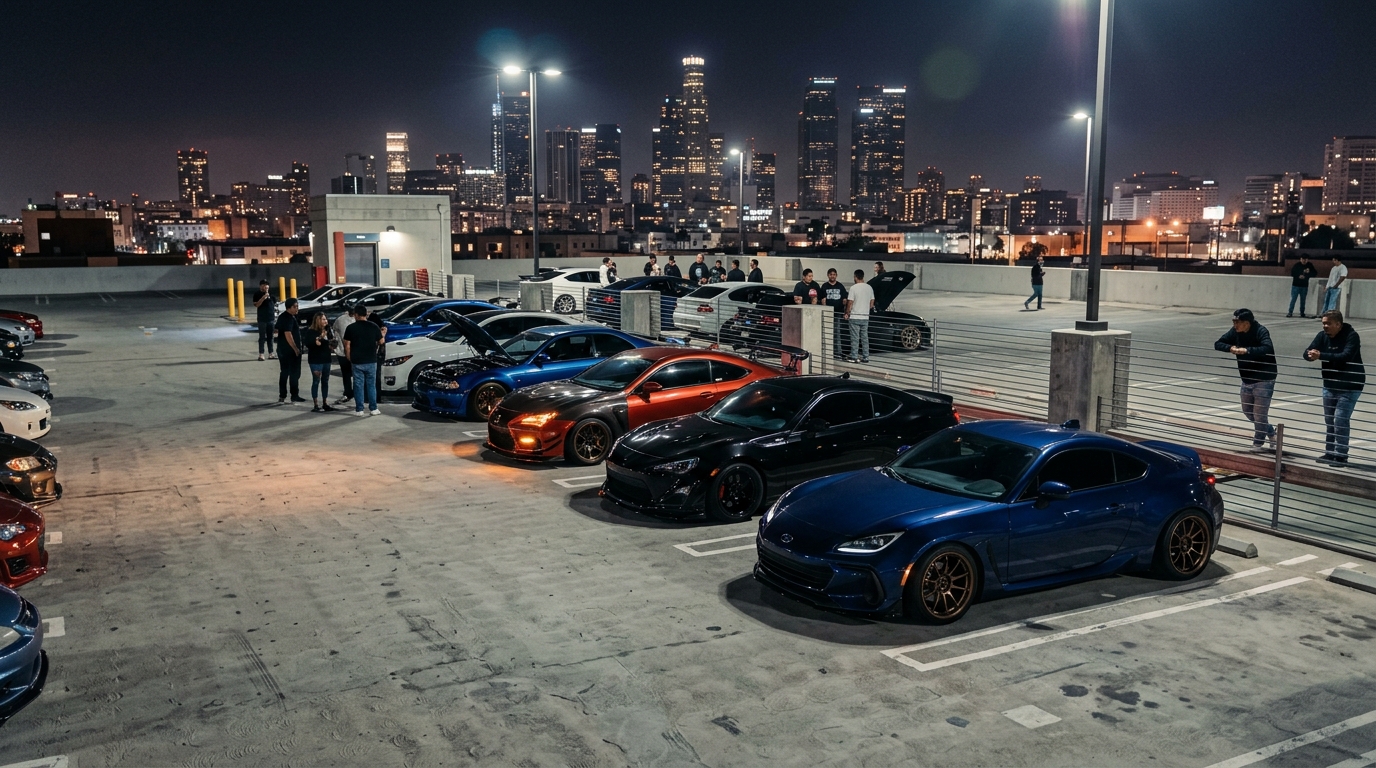
Many Los Angeles automotive gatherings continue after sunset. Nighttime lighting can create dramatic images, particularly when neon signs, parking structures, and city reflections surround the cars.
However, low light increases the chance of blurry photographs. It also makes awareness of pedestrians and moving vehicles especially important.
The best night images combine careful exposure with a safe shooting position.
Capture sharper car meet photos after dark
Start by finding a vehicle parked under consistent lighting. Avoid standing in the path of moving cars or entering restricted areas for a better camera angle.
On a smartphone, use night mode for stationary vehicles when appropriate. Hold the phone steady while the camera captures the image.
With a dedicated camera, a wide aperture can help gather more light. You may also need a higher ISO or slower shutter speed.
Each adjustment involves trade-offs. Higher ISO may introduce visible noise, while slower shutter speeds increase motion blur.
Night photography without excessive blur or noise
For handheld photographs, begin with a shutter speed that you can hold steadily. A stabilized camera or lens may help when photographing stationary cars.
Use a tripod only when the venue permits it and the equipment will not obstruct walkways or traffic.
Avoid placing tripods in driveways, active lanes, or other areas where people could trip.
Focus carefully on a recognizable detail, such as a headlight, badge, or wheel. Review the image before taking several more photographs.
If the highlights appear too bright, reduce exposure slightly. This can preserve useful detail in headlights and nearby signs.
Use reflections and city lighting creatively
Los Angeles offers plenty of interesting nighttime backgrounds. Parking structures, storefront lighting, and reflective pavement can create visual depth.
Look for reflections on polished body panels or windows. However, avoid photographing through another person’s vehicle without permission.
Try a wide composition that shows the gathering’s atmosphere. Then move closer for a detail image of a single car.
When editing, adjust exposure, contrast, and color carefully. Excessive saturation may make the vehicle’s real paint color difficult to recognize.
A consistent editing style can help a gallery feel cohesive while preserving each build’s distinctive appearance.
Respect vehicle owners, organizers, and private property
Car meet photography depends on trust. Owners often invest years of work and substantial money into their vehicles.
Ask before touching a car, moving an accessory, opening a door, or requesting that an owner reposition the vehicle.
When photographing people closely, obtain permission, especially before using their images in promotional material.
Respect posted venue rules. A public invitation to attend a gathering does not automatically grant unlimited photography access across private property.
Also, avoid blocking business entrances, pedestrian paths, and reserved parking spaces.
Keep car photography separate from dangerous driving
Never ask a driver to perform burnouts, donuts, or unsafe acceleration for a social media video on public roads or in an unauthorized parking area.
These activities can injure spectators and damage relationships between organizers and local businesses.
Los Angeles County continues to address illegal street takeovers through enforcement, community programs, and prevention efforts.
For official context, read the Los Angeles County street takeover safety information.
Our guide to legal LA car meets and illegal street takeovers explains why organized enthusiast gatherings differ from dangerous roadway stunts.
Build a useful car meet photo gallery
After the event, select your strongest photographs instead of publishing every frame. Include a combination of full-car images, build details, and environmental scenes.
Check sharpness, lighting, and background distractions before exporting the final versions.
For social media, vertical images work well for stories and reels, while landscape photographs can suit websites and automotive articles.
Maintain an organized folder with the event date, location, and vehicle information that owners have agreed you may share.
Do not publish private phone numbers, addresses, or other sensitive information without permission.
Credit builders and support the local scene
Many enthusiasts appreciate photographers who identify the owner or builder accurately. Ask for the preferred credit before posting.
Tag event organizers when appropriate and avoid implying that a vehicle belongs to a different person.
If someone requests a correction, respond professionally. A respectful relationship often leads to better future photography opportunities.
You can also browse the CarMeets.la gallery for ideas about presenting different vehicles and automotive styles.
For future outings, check the Los Angeles car meets fall 2026 guide for broader event-planning advice.
Prepare a simple photography checklist
Before leaving home, charge your batteries, clean your camera lens, and check available storage space.
Bring a microfiber cloth, suitable memory cards, and a small power bank when needed.
Review venue access and parking instructions before arrival. At the event, begin with wide photos, capture individual builds, and finish with details.
Ask permission when appropriate, stay out of traffic, and keep your equipment close to avoid creating obstacles.
Afterward, back up your photographs before deleting files from your camera or phone.
Good habits make it easier to focus on creativity rather than technical problems.
Improve your skills at every meet
Review your photographs after each event. Identify which compositions worked and which images suffered from poor light or distracting backgrounds.
Try improving one skill at a time. For example, practice controlling reflections during one outing and nighttime exposure during another.
Ask other photographers for constructive feedback. Car meets can provide an approachable environment for learning because every vehicle offers a different visual challenge.
Remember that expensive cameras are not a substitute for patience, observation, and respectful behavior.
LA car meet photography in 2026 offers many ways to connect with the automotive community. From a clean JDM build to a detailed lowrider, every vehicle has a story worth documenting.
Focus on lighting, composition, and accurate presentation. Above all, respect the owners and spaces that make these gatherings possible.
With thoughtful preparation, you can produce memorable automotive photographs while contributing positively to Los Angeles car culture.
Editorial note: This guide provides general photography and event safety information. Follow venue policies, property restrictions, and applicable traffic laws whenever attending a car gathering.